
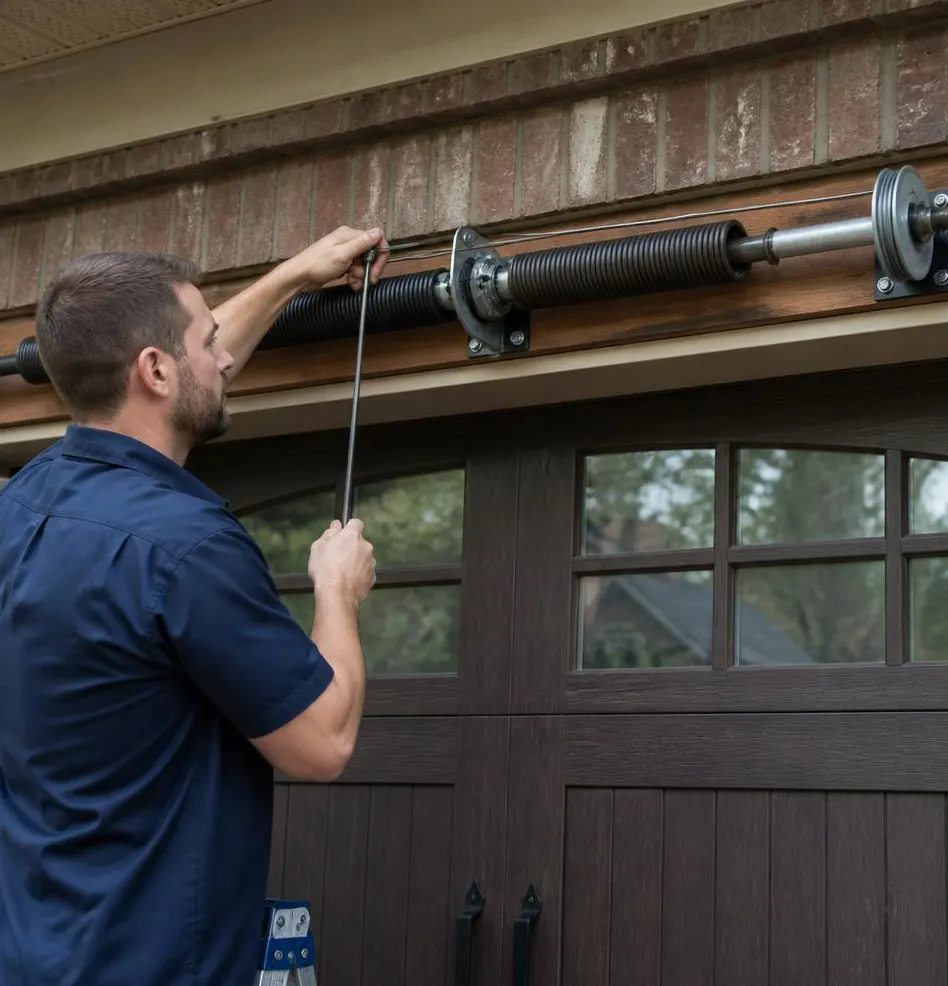
What a technician usually finds on these calls
The pattern is almost always the same. A homeowner finished off part of the garage into a home gym or workshop a year or two back, stopped pulling a car in and out, and now the door either won't open, groans on the way up, or the opener runs but nothing moves. When we get there, it's usually one of three things: the springs have gone stiff and rusty from sitting unused through a cold winter, sawdust or gym equipment is blocking the photo-eye sensors, or weatherstripping has cracked and let in enough moisture that the bottom panel is starting to warp. None of it is dramatic. It's just a door that went from daily use to almost no use, and nobody adjusted for that.
The argument underneath the argument
Usually there are two camps. One person wants to just stop using the garage door altogether — maybe even disconnect the opener — since the space is a gym now and the door is dead weight. The other wants to keep everything fully functional, partly for resale down the road and partly because a garage door is easier to fix than a wall is to un-fix. Both positions have a real point, and the right answer depends on how the garage was actually converted.
What happens to a door that just sits
Springs and rollers
A torsion spring under tension doesn't like sitting still for months at a time, especially through a humid summer followed by a cold, salty winter. Lack of movement lets surface rust form on the spring coils and roller shafts, and that rust adds friction the next time the door is asked to move. A door that hasn't opened in six months often needs more force to lift than one used daily — which is exactly when people assume the opener is dying, when it's really the spring.
Weatherstripping and seals
If the door is closed and never opened, the bottom seal and side weatherstripping take the full brunt of outdoor temperature swings without ever flexing. In this part of Kentucky that means baking in summer humidity, then going brittle in winter cold, then getting hit with ice and road salt tracked in if there's any slope to the driveway. Static seals crack faster than seals that get worked regularly, and a cracked seal lets in enough moisture to warp a wood-look steel panel over a season or two.
The opener and electronics
If the space is now a workshop, sawdust is the real enemy. It settles into the opener's chain or belt drive, gets into the trolley carriage, and coats the photo-eye sensors until the door starts reversing for no visible reason. Gym equipment stacked near the sensors causes the same problem without any dust at all — the door thinks something is in the way because, electronically, something is.
If you're finishing the space for real
Insulating the walls and ceiling of a converted garage without doing anything to the door itself just moves the weak point. An uninsulated steel door becomes the coldest surface in the room in winter and the warmest in summer, which shows up as condensation on the inside panel and, eventually, rust along the bottom edge. If the conversion is permanent, an insulated door or added door insulation kit keeps the temperature swings from concentrating on one wall. If it's not permanent — if a future owner or a future you might want the garage back — it's worth keeping the door itself in working order even while the space inside gets used for something else.
The middle ground that solves most arguments
Most homeowners land somewhere in between: keep the door fully operational, but treat it like something that needs a seasonal check rather than daily reliance. Lubricate hinges and rollers a couple of times a year, keep the sensors clear of equipment and storage, and don't let the door sit fully closed for a year straight without cycling it occasionally.
When to call Salvisa Garage Door
If a door that's been sitting idle is suddenly hard to lift, noisy, or not responding to the opener, that's worth a look before winter sets in — cold makes stiff springs and worn seals worse, not better. We offer Garage Door Maintenance to catch rust, dry hinges, and bad seals before they turn into a stuck door, and Spring Replacement when a spring has corroded or lost tension from disuse. Either way, it's better to deal with it now than during the first hard freeze. Give Salvisa Garage Door a call and we'll get your door sorted before the weather turns.